Self-Debugging Agent
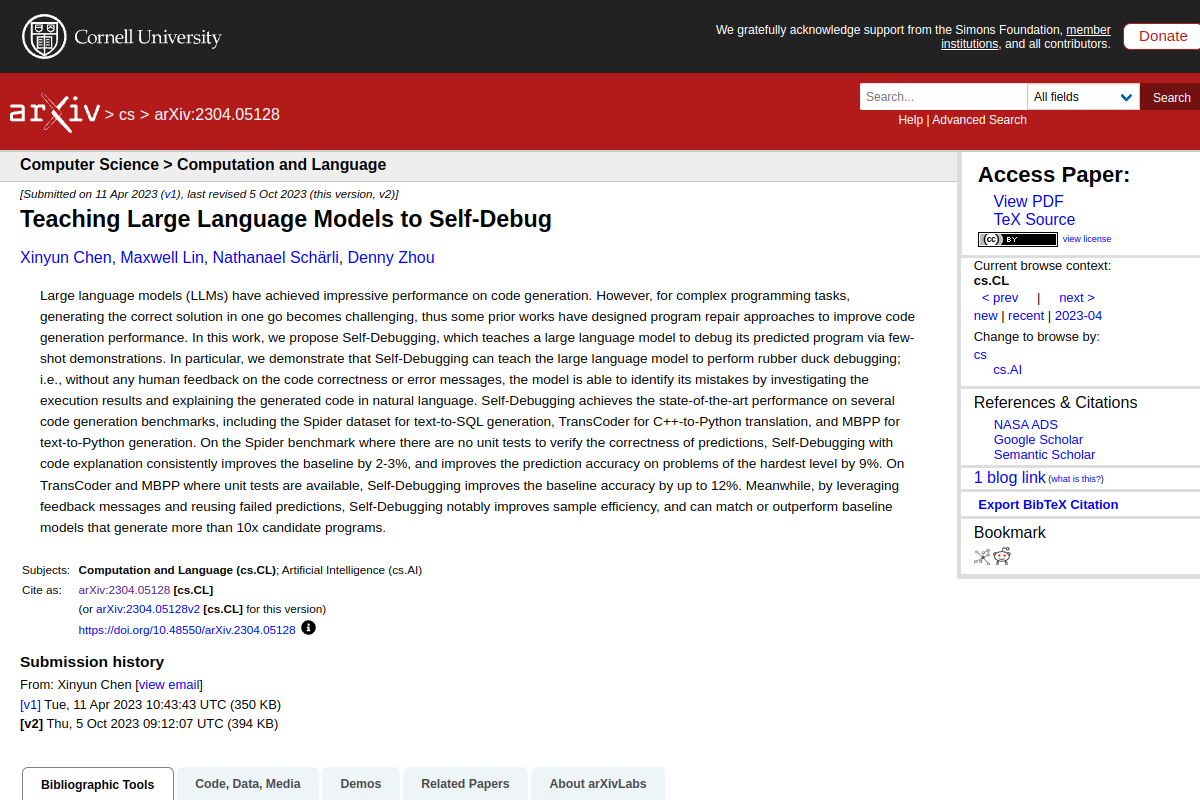
Self-Debugging Agent is a agent pattern used in AI and large language model systems. A specialized agent that receives error reports and generates solutions or patches for the code base. The core purpose of this pattern is to provide a repeatable structure that developers, researchers, students, and AI application designers can apply when building or improving interactions with language models. In practical use, it is especially relevant to automated debugging, development efficiency. Rather than treating every AI request or workflow as an isolated implementation, this pattern provides a recognizable approach that can be adapted to different applications, models, domains, and levels of system complexity. It is categorized as an advanced pattern and is generally more appropriate for users designing sophisticated LLM systems, agent architectures, or production-oriented AI workflows. Implementation details can vary depending on the selected model, prompt structure, available tools, external data sources, orchestration framework, and application requirements. When applying the pattern, users should define the intended objective, inputs, expected outputs, constraints, validation method, and failure-handling behavior so that the resulting workflow remains understandable and testable. The associated dataset tags are agent,code,debugging, which can be used to group and discover this pattern alongside related techniques. The source included with this record should be consulted for the original reference or additional technical context, while real-world implementations should be evaluated with representative tasks before production deployment.
Tool Details
Preview
Related Tools
Retrieval Augmented Generation (RAG)
Agent Pattern
Retrieval Augmented Generation (RAG) is a agent pattern used in AI and large language model systems. Augmenting the LLM's knowledge base with external, relevant documents for grounded answers. The core purpose of this pattern is to provide a repeatable structure that developers, researchers, students, and AI application designers can apply when building or improving interactions with language models. In practical use, it is especially relevant to grounded qa, document summarization, private data query. Rather than treating every AI request or workflow as an isolated implementation, this pattern provides a recognizable approach that can be adapted to different applications, models, domains, and levels of system complexity. It is categorized as an advanced pattern and is generally more appropriate for users designing sophisticated LLM systems, agent architectures, or production-oriented AI workflows. Implementation details can vary depending on the selected model, prompt structure, available tools, external data sources, orchestration framework, and application requirements. When applying the pattern, users should define the intended objective, inputs, expected outputs, constraints, validation method, and failure-handling behavior so that the resulting workflow remains understandable and testable. The associated dataset tags are agent,knowledge,search, which can be used to group and discover this pattern alongside related techniques. The source included with this record should be consulted for the original reference or additional technical context, while real-world implementations should be evaluated with representative tasks before production deployment.
Reflection Agent Pattern
Agent Pattern
Reflection Agent Pattern is a agent pattern used in AI and large language model systems. An agent evaluates its own output against criteria and initiates self-correction loops. The core purpose of this pattern is to provide a repeatable structure that developers, researchers, students, and AI application designers can apply when building or improving interactions with language models. In practical use, it is especially relevant to code review, complex document drafting, reducing hallucination. Rather than treating every AI request or workflow as an isolated implementation, this pattern provides a recognizable approach that can be adapted to different applications, models, domains, and levels of system complexity. It is categorized as an advanced pattern and is generally more appropriate for users designing sophisticated LLM systems, agent architectures, or production-oriented AI workflows. Implementation details can vary depending on the selected model, prompt structure, available tools, external data sources, orchestration framework, and application requirements. When applying the pattern, users should define the intended objective, inputs, expected outputs, constraints, validation method, and failure-handling behavior so that the resulting workflow remains understandable and testable. The associated dataset tags are agent,selfcorrection,quality, which can be used to group and discover this pattern alongside related techniques. The source included with this record should be consulted for the original reference or additional technical context, while real-world implementations should be evaluated with representative tasks before production deployment.
Tool-Use Agent Pattern
Agent Pattern
Tool-Use Agent Pattern is a agent pattern used in AI and large language model systems. Enabling an agent to select and execute external functions or APIs (e.g., calculator, web search). The core purpose of this pattern is to provide a repeatable structure that developers, researchers, students, and AI application designers can apply when building or improving interactions with language models. In practical use, it is especially relevant to real-time data access, calculation, external system integration. Rather than treating every AI request or workflow as an isolated implementation, this pattern provides a recognizable approach that can be adapted to different applications, models, domains, and levels of system complexity. It is categorized as an advanced pattern and is generally more appropriate for users designing sophisticated LLM systems, agent architectures, or production-oriented AI workflows. Implementation details can vary depending on the selected model, prompt structure, available tools, external data sources, orchestration framework, and application requirements. When applying the pattern, users should define the intended objective, inputs, expected outputs, constraints, validation method, and failure-handling behavior so that the resulting workflow remains understandable and testable. The associated dataset tags are agent,apis,functioncalling, which can be used to group and discover this pattern alongside related techniques. The source included with this record should be consulted for the original reference or additional technical context, while real-world implementations should be evaluated with representative tasks before production deployment.